◤ Top story · Lifespan.io
THYMULIN (THYMUS HORMONE) CUTS INFLAMMAGING MARKERS IN CANCER-BEARING MICE...
*Thymulin, a thymic peptide, reduces age-driven inflammation in tumor-bearing mice.*
As of WED, AUG 19, 8:54 AM · New Brief Daily
— Founders of the field —
Professor · M.D. · Ph.D. · Doctor of Medical Sciences · 1946–2023
Vladimir Khatskelevich Khavinson was the Russian gerontologist who founded the modern field of peptide bioregulation. From a military-medicine laboratory in Leningrad in the 1970s, he and his collaborators worked out a thesis that has shaped peptide longevity research ever since: short, tissue-specific peptides — three to four amino acids long — can act as endogenous signals that modulate gene expression in the organs they were extracted from. His program produced more than two dozen named peptide preparations over the next five decades. The best known of them, Epitalon (Ala-Glu-Asp-Gly), is the molecule most peptide longevity research still references today.
Khavinson graduated from the S.M. Kirov Military Medical Academy in Leningrad — now St. Petersburg — in 1972, and remained there for the first two decades of his career, ultimately retiring with the military rank of Major General of Medical Service. In 1992 he founded the St. Petersburg Institute of Bioregulation and Gerontology and served as its director, and later its Honorary Director, for the rest of his life. He held the position of Vice-President for the European Region of the International Association of Gerontology and Geriatrics (IAGG) and was elected to membership in the Russian Academy of Medical Sciences.
With his collaborator Vyacheslav Morozov, Khavinson began isolating short peptides from animal organs and asking whether the same peptides — applied to the corresponding organ system in another animal — would restore aging-related dysfunction. The first preparations were tissue extracts: Epithalamin from bovine pineal gland, Thymalin from thymus, Cortexin from cerebral cortex, Retinalamin from retina, Prostatilen from prostate. From those, his laboratory then synthesized short defined-sequence analogs: Epitalon (Ala-Glu-Asp-Gly) modeled on Epithalamin, Vilon modeled on Thymalin, and others. The thesis — controversial in some quarters, well-replicated in others — was that these synthetic short peptides bind DNA and histones to influence transcription in tissue-specific ways.
Khavinson's group published a long series of papers across the 1990s, 2000s, and 2010s reporting effects of his peptides on telomerase activity, telomere length, melatonin secretion, immune function, and biomarkers of aging in animals and elderly humans. His 2003 paper with Bondarev and Butyugov in Bulletin of Experimental Biology and Medicine is the foundational in vitro reference for Epitalon-induced telomerase activation. Animal lifespan extensions were reported in transgenic mice and in Drosophila. Russian clinical observations across roughly thirty years reported benefits in elderly patients with cardiovascular and metabolic disease. Western replication outside his institute was sparse for most of his career — a limitation he himself acknowledged. The first major independent replication of the core telomerase mechanism arrived in 2025 from a laboratory at Cardiff, two years after his death.
Khavinson was named Honored Scientist of the Russian Federation and Honored Inventor of the Russian Federation, the country's two principal state recognitions for sustained scientific contribution. He authored more than 700 scientific publications and held over 200 patents. He died in November 2023, shortly before his 77th birthday. His laboratory at the St. Petersburg Institute of Bioregulation and Gerontology continues the work he started.
On this page, every Featured Brief that touches Epitalon, Thymalin, Cortexin, Vilon, or any of the related bioregulator peptides is downstream of his work.
Last updated August 19, 2026 — I read this morning's peptide research and picked the items that mattered. Fresh brief tomorrow.
*Thymulin, a thymic peptide, reduces age-driven inflammation in tumor-bearing mice.*
Research VialsResearch review of LL-37 — the only human cathelicidin, studied for broad-spectrum antimicrobial activity, immune modulation, and wound healing.
PubMed · Lancet (London, England)Rosenstock J et al., Lancet (London, England) · 2026 Mar 21. PMID 41765029.
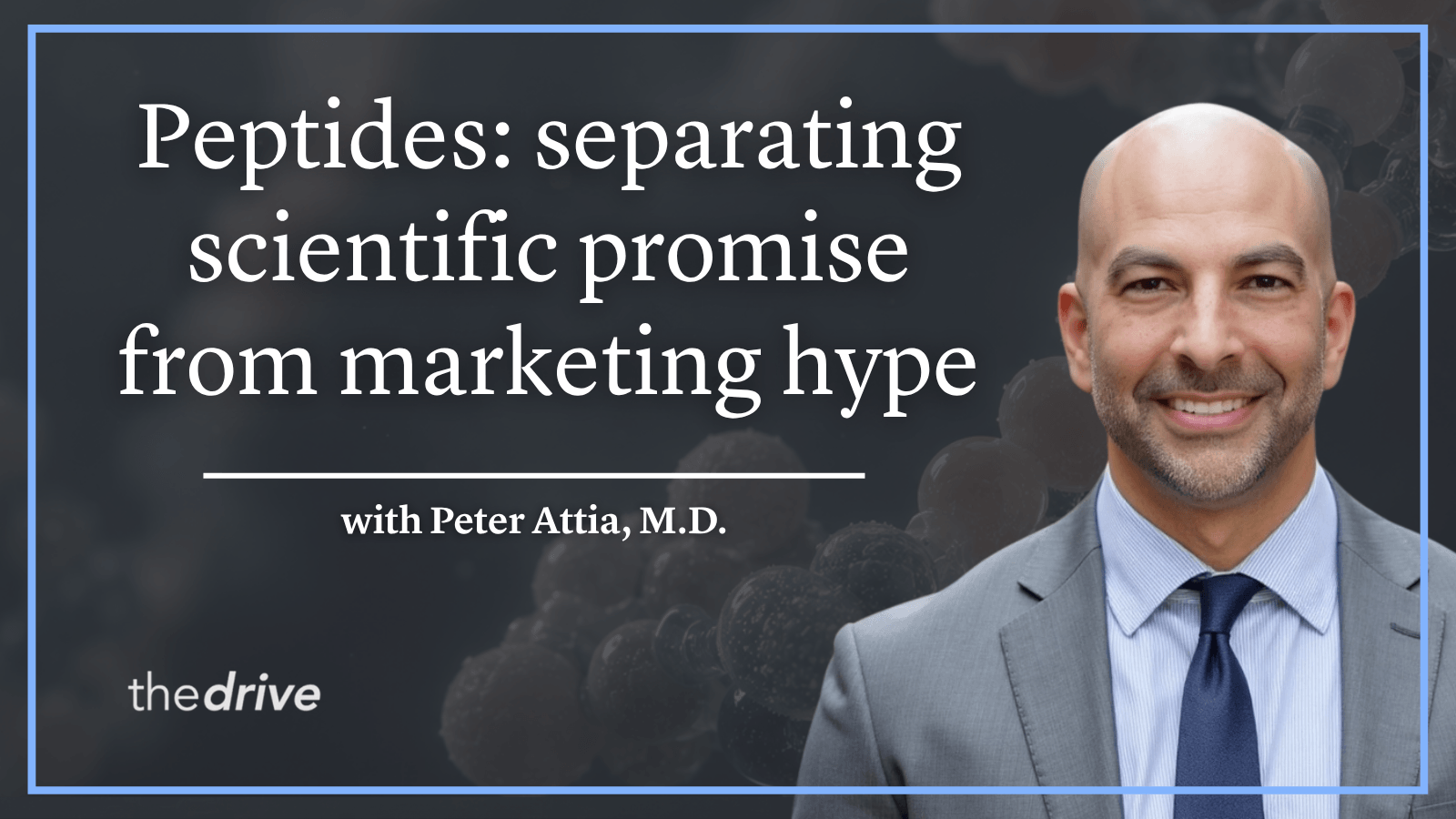
Peter AttiaPeter Attia's episode #403 takes a hard look at peptides as a drug class — where the evidence holds up and where marketing has outrun the science. His framing: real potency is a reason for more caution, not less.
Aging CellA new Aging Cell paper maps how GLP-1 (the hormone targeted by semaglutide and tirzepatide) interacts directly with mitochondria to affect how cells age. The finding suggests GLP-1 receptor agonists may do more than suppress appetite — they may slow a core aging mechanism.
eLifeResearchers report that MOTS-c (a peptide encoded in mitochondrial DNA) acts as a host defense peptide with direct immune functions. The work reframes MOTS-c as more than a metabolic regulator — it appears to have ancient antimicrobial roots.
Lifespan.ioA massive human genetics study found rare mutations in FNIP1 (folliculin-interacting protein 1) that protect against cardiometabolic disease. Experiments in liver cells and mice suggest the pathway could be a drug target — relevant to the same metabolic terrain where peptide therapies operate.
Cortex LabsRight now, all digital/downloadable products are 20% off. Code: 20now 🚀 TRT Products & Coaching 🚀 📞 🧨💣 Book 1 on 1 coaching with Ryan, and solve Libido/EQ problems on TRT, or from hair loss compounds: https://livecortex.com/trt-sexua
Doctor Michael MuellerAre you taking Semaglutide, Tirzepatide, or Retatrutide? GLP-1 and GIP receptor agonists are transforming weight loss and metabolic health, but making key protocol errors can cause severe muscle loss (sarcopenia), metabolic slowdown, and pa
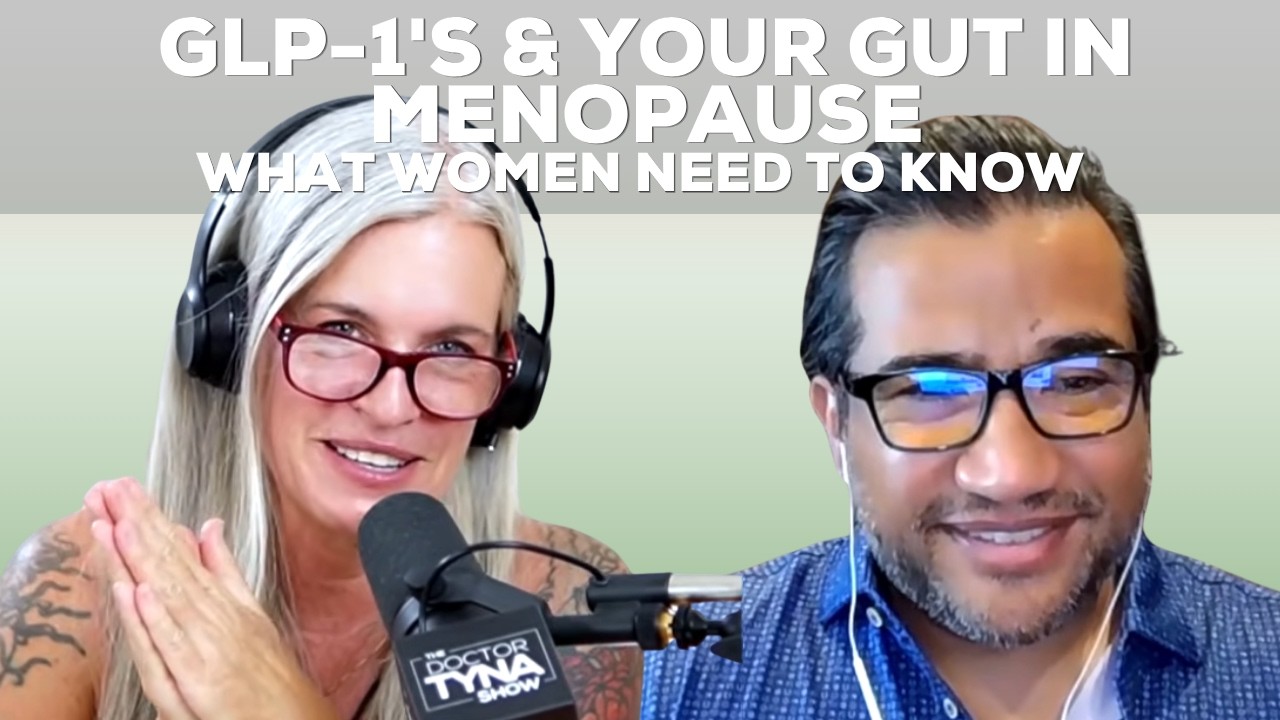
Dr Tyna MooreJoin my NEW menopause community for women: https://www.skool.com/drtyna EP. 277: In this episode, I’m sitting down with my longtime friend and microbiome expert Kiran Krishnan from Just Thrive for a conversation I have been WAITING to have
Dr Tyna MooreJoin my NEW menopause community for women: https://www.skool.com/drtyna On this Episode, Dr. Tyna and Dr. Tony Youn cover how menopause causes rapid collagen and bone loss that ages women's skin and facial structure. They share practical s
Thomas DeLauerUse Code THOMAS25 for 25% off Your First Order of SEED: http://seed.com/thomasyt Subscribe to Dr. Schoeff on YouTube: https://www.youtube.com/@UC8wMw_x7sBWXk-D7r77zZAg Follow Dr. Schoeff on Instagram: https://www.instagram.com/jonschoeff/
Regan ArchibaldDoes 5-Amino-1MQ actually work for fat loss, energy, and longevity? In this video, Regan Archibald breaks down how 5-Amino-1MQ targets the NNMT enzyme, supports the NAD salvage pathway, and what research suggests about its effects on fat me
Dave AspreyDave Asprey and Gabby Reece Talk Testosterone Therapy, Scream Cream, Autism as a Superpower, Cancer Protocols, and Surviving Fame in This Double Interview Episode Mega-Episode time! Your hormones might be causing symptoms you've been bl
Dr Jones DCBook your free discovery call *HERE:* https://drjonesdc.com/yt1d SS-31 has something most peptides don’t: a real FDA approval—but the story behind that approval is far more complicated than it sounds. I look at what the clinical trials ac
Dr Alex TatemSermorelin might be one of the most legitimate peptides in the entire “anti-aging” world—and also one of the most misunderstood. Unlike HGH, sermorelin isn’t growth hormone. It’s a fragment of growth hormone-releasing hormone (GHRH) that si
Research VialsHow AMPK — the master metabolic sensor — connects exercise, fasting, and metabolic peptides like MOTS-c and 5-Amino-1MQ. A pathway guide for researchers.
Dr Nick ZyrowskiN-Acetyl Cysteine: http://bit.ly/2MwBtnO 5 AMAZING Facts About NAC ( N-Acetyl Cysteine) You Didn't Know is a video that looks at the health benefits of nac. N acetylcysteine is key to improving your health naturally with many science backe
Lifespan.ioNew research details how five types of brain cells send and receive signals that spread cellular senescence — the zombie-cell state linked to brain aging. Understanding the relay network is a prerequisite for stopping it, including via peptide-based senolytics.
Lifespan.ioThe Conboy lab describes a combination treatment that clears both senescent cells and tumor cells in preclinical work. The dual-target approach is directly relevant to researchers studying FOXO4-DRI and other peptide-based senolytic strategies.
Lifespan.ioGenBio — co-founded by Nobel laureate David Baker — has released a 'world model' AI that can simulate a cell's natural state and its response to interventions. For peptide researchers, this kind of virtual testing bed could compress years of screening into weeks.
BluePrint (Bryan Johnson)Bryan Johnson's Blueprint team breaks down the difference between true LLLT (low-level laser light therapy) and cheaper LED devices marketed as laser therapy. The post is relevant context for researchers tracking non-peptide aesthetic optimization tools alongside GHK-Cu and Melanotan work.
BluePrint (Bryan Johnson)Bryan Johnson's team finds that a 9°F rise in nighttime temperature costs about 23 minutes of sleep per night — roughly six days per year. For researchers pairing DSIP or other sleep-adjacent peptides with environmental interventions, temperature control may be the baseline variable worth fixing first.
Aging CellA new Aging Cell paper identifies ANGPTL8 as a driver of fat-tissue senescence through the AKT2-mTOR pathway. The finding is relevant to metabolic peptide research — it pinpoints a molecular switch that may explain why fat depots age faster in some individuals.
Aging CellTargeting RANKL — a signaling protein that drives bone breakdown — prevented bone loss, improved muscle function, and extended lifespan in accelerated-aging mice. The result adds context for researchers studying peptides like TB-500 (Thymosin Beta 4) in musculoskeletal aging models.
Fight Aging!XPRIZE has named its Healthspan finalist teams — research groups competing to demonstrate measurable reversal of aging markers in human subjects. The prize structure is designed to reward therapies that outperform lifestyle-only interventions, which raises the bar for every peptide protocol in the field.
BluePrint (Bryan Johnson)Kate Tolo documents using multispectral imaging across 8 skin markers to track a multi-year skin reversal protocol. For researchers studying GHK-Cu (copper peptide) and other skin-repair peptides, this kind of objective measurement framework is worth noting.
Research VialsSafety protocols for handling research peptides — PPE requirements, sharps disposal, chemical handling, and contamination prevention in the laboratory.
Research VialsA detailed reference breaking down the structural and stability differences between the three research forms of Epitalon (a tetrapeptide studied for telomerase activation and longevity). Useful for researchers choosing between forms for experimental design.
Research VialsSide-by-side research comparison of AOD-9604 (a GH fragment studied for fat metabolism) and semaglutide (a GLP-1 receptor agonist). The piece maps where mechanisms overlap and where they diverge — relevant context for metabolic researchers working across both compound classes.
Peter AttiaEp. 404 with psychiatrist Linus Abrams argues that symptom reduction is not the same as full recovery — and that hormonal and peptide-adjacent systems are underused in modern psychiatry. Relevant for researchers tracking kisspeptin and neuropeptide effects on mood and cognition.
Fight Aging!A focused look at why senescent cell burden rises with age — the immune system loses the ability to clear them efficiently. The article connects directly to thymic peptide research and immune-restoration strategies like Thymalin and Thymosin Alpha 1.
Lifespan.ioResearchers built a transcriptomic clock called Pasta that predicts the age-related effects of compounds and gene knockouts from RNA data. A tool like this could eventually score peptide interventions without requiring long lifespan studies.
Fight Aging!A review of how the gut microbiome ages and which interventions show the strongest evidence for restoring favorable composition. Relevant for researchers tracking BPC-157 and GLP-2's roles in gut barrier function.
A daily brief on peptide research. I read new papers, clinical trials, and physician interviews each morning, and run the best find as the top story. The rest of the page fills with smaller items below.
We watch PubMed, the DOI registry, and a short list of physician-researcher YouTube channels. We pick stories that move the field — new trial results, mechanism work, safety data, and clear teaching.
Peer-reviewed papers, ClinicalTrials.gov, and a small group of clinicians who teach in public. Every link goes back to the source so you can read the original.
A new top brief lands every day. The rest of the page rotates as fresh stories arrive. The full back catalog lives in the archive.
Yes. No ads, no affiliates inside the brief, no sponsored slots. Peptide companies that want to talk can use the contact page; their pitches do not run as news.